
Showing posts with label SEO. Show all posts

Tuesday, July 28, 2020

12 Master Tips To Write a Better Blog Post

12 Master Tips To Write a Better Blog Post

Have you ever read an awesome piece of content that truly stuck with you? Are you pondering how to write a better blog post that produces an affect? Writing incredible blog posts ain't simple. But it's not rocket science either!


In today’s article, I am going to tell you what makes a great blog and share a few recommendations on how to write a great blog post that’ll bring in a lot of activity. So let’s start! What Makes a Great Blog Post? In the event that you think that composing a great blog post fair implies utilizing the correct words, you’re mixed up. There is a parcel of other components that contribute to making your web journal post a victory. In reality, it’s conceivable (and indeed beautiful common!) to be an incredible author but not so great at blogging. How’s that conceivable? Well, assume you drafted a piece of that’s exceptionally well-researched and nitty-gritty and incorporates all the data your perusers are trying to find. But it’s SO well-researched and instructive that your sections are truly long and it’s difficult to examine. Possibly you overlooked to include pictures or other media substances within the fear of hindering the stream of your article. Since it looks like an enormous divider of content, individuals are more likely to hit the “back” button than to remain and studied the complete thing.

How to write a good blog post? Avoid "walls of text"!

Do you think individuals would call that a great post?

So apart from the words themselves, you also got to consider…


  • How simple is it to understand? 
  • How visually attractive is this post? 
  • How well does it reply to your readers’ questions? 
  • How will it keep pulling in more traffic? 

To assist you to publish a tremendous piece, I’ll show you ways to answer these queries and a lot of.

 Ready? Let’s get begun with our master blog writing tips.

Expert Tips for Writing a Blog Post 

Being a great author is hard. But with a small practice and a few research, it won’t take you long to connect the positions of other awesome bloggers.

So let’s check out how you too can come up with a blog post that you have always wanted to create when you started a blog.

1. Select a Great Topic 

To begin with, step towards writing a blog post is to choose a great topic.

You’ll have to discover what your supporters need to know and read about, so your post will proceed to induce traffic after it’s published.

Try to base the post on reader feedback, a known issue within the industry, or competition analysis.
Blog writing tips - start with a good idea

Platforms like BuzzSumo can assist you to figure out what points are trending. Check out our list of SEO tools for more recommendations on how to come up with blog post thoughts that are Search engine optimized.

If you need assistance, here are a few blog post ideas to urge you to begun.

2. Do Your Research

Once you have your idea, make sure to research the front page of Google and your main competitors at this stage to see how you can improve on what’s out there. If you can’t write a high quality post that’s better than theirs, don’t bother!

You don’t need to be an expert on the topic, but you do need to do your research to make sure you’re adding value.

3. Take Notes and Start an Outline

While you do your research keep a notebook handy where you can take down the important points and outline your topic.

Okay, if not a notebook at least keeps a Google doc tab open. I like using Google docs because, unlike using a notebook, I don’t have to bother about losing it.

4. Start Drafting Your Blog Post

Now that you have the outline, you can sit down to write your post. I generally like drafting it directly on my WordPress dashboard. It saves a lot of time and extra effort if I don’t have to copy and paste it from somewhere else later.

Tips for writing a blog post

Are you struggling to start writing, or keep getting stuck or distracted? See our tips on how to write faster and you’ll be churning out more posts in no time!

5.Hook Your Readers With a Great Opening

If you can hook your readers with a good opening consider half your work to be done. Because if your introduction is boring, people wouldn’t bother to read the rest.

Many writers find it easier to write the body of the blog post first and save writing the intro for last.

A good way to write a great introduction is to pose a question addressing the reader’s problem. Then you can tell them how reading your post can help them tackle it.

This is a great way to grab your readers’ attention, and they’ll definitely want to read it till the end in the hope of finding the solution.

6. Write Like You Talk

Don’t overlook the style and tone of your writing. Both of these elements can make a big difference.

Writing like you’re talking to your reader can make them feel like they’re having a conversation with someone, rather than actually reading a post.

How to write a good blog post - write conversationally

Your readers will feel like you’re talking to them one-one-one to help them figure out a problem that you can relate to. This is great for building a loyal readership.

7. Make It Scannable

People usually don’t read blog posts word-for-word. Instead, they scan them for the information they’re looking for.

That’s why it’s important to format your posts in a way that’s easy to scan. It’ll help your readers to get the info they’re looking for quickly, so they’re more likely to stick around your blog.

Here are a few ways you can make your blog posts scannable:

Use Subheadings: Subheadings help your readers to see the main topics of your post, and will help you to stay organized and on track when writing.

Write Short Sentences: Short sentences are much easier to read. Long sentences can make it complicated to understand.

Keep Paragraphs Short: When your paragraphs are too long, it’s harder to read. I recommend using 2-4 sentences in most of your paragraphs, with some 1-sentence paragraphs to grab the eye.

Use Bullet Points: Whenever you have a list, you can use bullet points to make your message precise and clear and easy to scan, instead of listing items in a sentence.

If you use these tips to make your text visually engaging, your readers will be more likely to read the whole post.

8. Use Images for Visual Engagement

A simple image has the power to make a boring post much more fun and engaging.

What you fail to explain in words, can be done with just a single image or a screenshot. Besides, it breaks the monotony of words and offers a refreshing visual break to the reader keeping them engaged for longer.
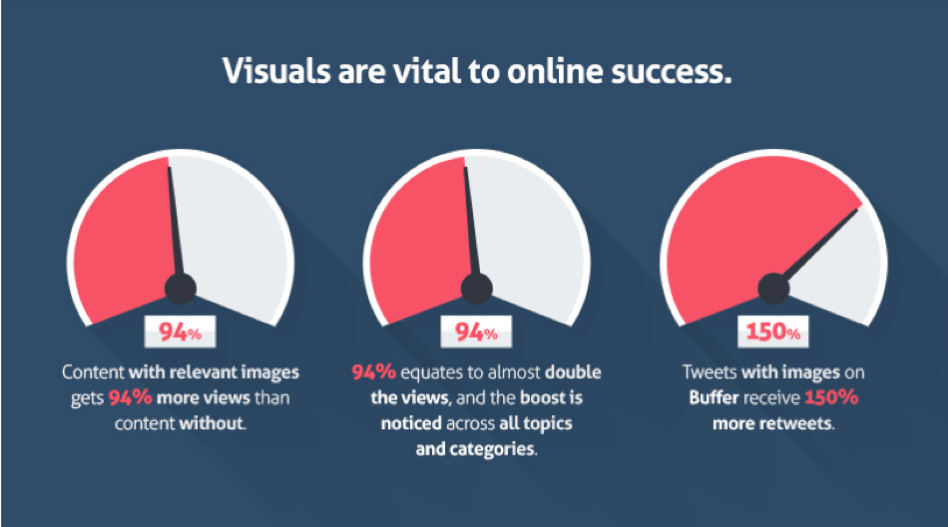
Blog writing tips - use visuals

9.Include a Compelling Call to Action

Your post can’t be called a successful one unless you can convince your users to take action on the site.

What should your call to action (CTA) be? You could ask your readers to:


  • Sign up to your email newsletter
  • Leave a comment
  • Share your post on social media
  • Buy your product

It’s best to stick to one CTA so your readers aren’t distracted.

For your CTA to be compelling, put yourself in the readers’ shoes and talk about the benefits of taking action. What’s in it for them?
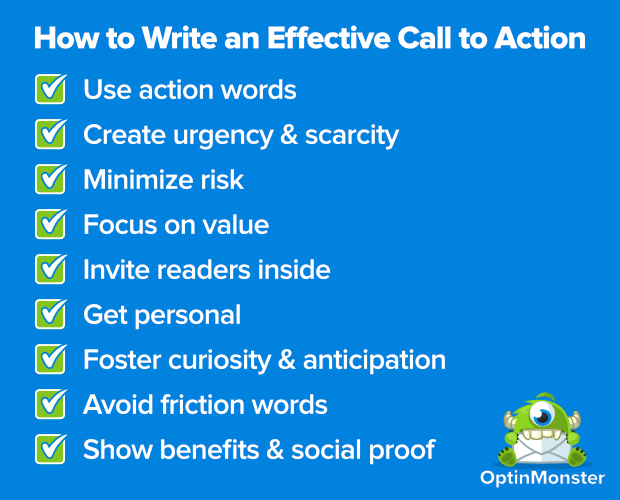
Tips for writing a blog post - include a call to action


10. Add a Featured Image 

Believe it or not, your readers won’t squander more than 2 seconds to choose whether or not to press on your post. In case you need a positive reaction you wish to have a plan.

Adding an eye-catching featured image to your post may be an extraordinary way to urge more clicks, shares, and engagement.

 Shutterstock, Unsplash, and Pixabay are incredible platforms to assist you to discover an appealing image to use. You can also use Canva if you like them edited. If you need more help, here’s how you can create great featured images for your blog posts.

11.Level Up Your SEO

How to write a good blog post - optimize it for SEO level up your

If you think you know how to write a great blog post but it doesn’t get any traffic, you’re lost a step! 

For your post to have a part of readers, you would like to level up your SEO. If you’re using the Yoast plugin (expecting you've got as of now installed it on your site), a lot of your work is done. 

 You ought to include a focus keyword, include a title with the watchwords in it, additionally include an SEO title and meta description. 

Your content also has to have more than 300 words. However, I would suggest you to keep your word check to at least 1000 words. 

Further, the images in your post ought to be appropriately optimized as well. Make sure they’re the right size and have descriptive names before you upload them. Each image should also have proper alt tags and categories.

12.Publish at the Proper Time 

Now you’re prepared to publish! 

 The last step is to read out your post to yourself. This makes a difference you identify mistakes and lets you amend them before you hit the publish button. Do a speedy read over for spelling and designing but don’t waste as well much time. 

Hit publish at a top time. For me that’s between 8 am and 10 am on Monday, Wednesday or Friday on East Coast USA time.

And that’s how to write a great blog post! Wasn’t too troublesome, was it? Fair take after these quick steps and see how you'll be able master the art of writing a great blog post in no time.

Tuesday, April 5, 2016

Optimize Image for SEO by Adding Alt and Title Attributes

All Bloggers optimize their posts to get a better rank in search results that helps us to increase our blog's traffic. As well as we optimizes our posts we should have to optimize images in the posts also. Optimizing Images also brings us a lot of traffic from Search Engines. Most of us use Google Images Search to find suitable image for blog posts so if we optimize our images then surely it will get better position and hence we get more organic traffic. Prettily it has two benefits one is getting traffic from images search and second is that it helps Web Crawlers to understand our post more accurately hence higher SERP. So today I will show how you can add alt and Title tags to your blogger blog posts images.

SEE ALSO: Add Stylish Vertical Floating Sharing Buttons to Blogger


Benefits Of Alt and Title Tags:

Both Alt and Title tags works as a description of the image. Web crawlers cannot read the images but they can understand it by name i.e Title and Alt tags. We have to choose always best and short keywords to name our images.

Adding Alt and Title Tags:

  • Go to blogger dashboard.
  • Write new post.
  • Upload an image by clicking the image icon from the top menu bar as shown below.
insert image upload an image alt tag image seo
insert-image
  • Now to add title and alt (description) attribute to your image left click on the image and choose properties.
insert image upload an image alt tag image seo
Properties


Once you click on the properties link, a pop up box will appear. Enter title and alt tag there as shown in below screenshot.

insert image upload an image alt tag image seo
title and alt tag
Now click Ok and you are done!

Use this feature very neatly. This will surely help your blog to rank well in search engines. Don’t use too many keywords in these tags. Only use one keyword that describes your blog post image very well.
I hope you can understand the benefits of these tags and know how to add them. Now Its your turn to optimize your post images and write your feedback in the comment box till then Stay Amazed!


Friday, April 1, 2016

8 Google Keyword Rank Checker Tools

Keyword rank checking is the most common practice done by SEO professionals and bloggers in order to check if they are appearing on the Google search results for the query they want to appear for. Further they take required actions to improve their keywords ranking.

If they are ranking then at which number is it? Rank checking also helps in knowing who your competitors are on the SERPs (Search engine Ranking Pages) and it is then that you can plan to outrank them.

There are a number of tools to check Google keyword rankings. In this post, we will concentrate on how to easily and quickly check your rankings.


8 Google Keyword Position Checker Tools

1) SEMRush


SEMrush is professional’s favorite tool which I personally use to know the keywords position of my particular posts. On SEMrush, you enter the URL of any site or particular page and you get the information about the keywords that page is ranking for.

SEMRUSH Google Keyword  rank checker
SEMRush

This professional search engine marketing tool is free to use for several times and for higher usage you can get their subscription. You can get free 14 days trial of SEMrush pro account from here.


2) SEO SERP Workbench:


SEO SERP workbench is a chrome extension so you don’t have to worry about offline software that might face no updates. SSW is used by bloggers and professionals alike to know their search engine rankings of the keywords. It is downloaded over 79K times which show how useful people find it.

SEO SERP Workbench
SEO SERP Workbench
It supports many countries like US, UK and others and you can select a keyword and find the rankings of your site as well as your competitor’s site through the extension.

SEE ALSO: How To Display Most Commented Posts In Blogger


You can download and use it for instant comparisons and rank analysis and did I mention is it free?

Try SEO SERP Workbench


3) SEO scores Android app:


This one android app makes the desktop users jealous for sure. It is a complete SEO toolkit with nearly 32 SEO tools packed into one. It gives you a score on your ranking, alerts you on blog mentions, gives backlink analysis and helps in backlink comparison and a lot more.

If you have an android set you won’t need tools ever, just install this app and you are set to go.

Here is the process of getting started:

Download the app from the app store > install > restart > add keywords and check rankings: it is as simple as that.

seo-scores-android-app


You don’t need to enter the URL again and again which is a time saver as we are using a mobile device. The report is mailed to your email id which is another goodie as you don’t have to export the data manually. This “export” feature is something so useful because most desktop clients don’t provide.

4) Small SEO tools:


Small SEO tools have a big name when it comes to doing SEO sleekly and without much hassle. Mainly it is used for various other purposes like the backlink checker tool.

Small SEO tools

Its function as a keyword rank tracking tool is very fast and allows up to 20 keyword tracking per request. It supports three search engine visually Google, Bing and Yahoo.

Try Small SEO tools

5) Moonsy’s Google Position checker:


Moonsy has a very sleek feature. Although free it is a powerful tool that lets you check your ranks as well as a competitor rank analysis itself. What else could you ask for a rank checker tool?

Why Moonsy is something most bloggers go for is its clean search page with the coveted functionality to add more than one domains for testing the same ranks of the same keyword.

Moonsy’s Google Position checker:


Using this, you can also add your competitor’s site to compare how rankings have been working for you both.


Try Moonsy’s Google Position checker


6) Rank Checker


Rank Checker is a Firefox extension by SEObook, which is claimed to be open source and secure. By secure I here mean that your data is not exported to any SEO company which can manipulate it to their profit. The extension is completely hosted on your PC and tracks keyword rankings easily.

Firefox Rank Checker Add-ons

If you have Google account logged in, you can get personalized report on rankings but there is also an option to turn it off in order to see how you rank for keywords in the search engines in general.

SEE ALSO: How To Optimize Images For Better Search Engine Rankings


If you want to validate your ranking shown, you can scroll over the number, press CTRL and clicking the mouse simultaneously. They also have “export as .csv” feature in the extension.

Try Rank Checker


7) Keyword Rank checker by SERPS.com:


Serps.com is another free tool that is the best when you are doing searches that are based on countries. It has a locality based rank tracker and has up to 100 country supports.

serps-Free-Keyword-Rank-Checker

Try Keyword Rank checker


8) SEO Centro:


SEO Centro is an SEO based web portal like the small SEO tools and Moonsy. It provides a detailed analysis of your keyword ranking based on three search engines viz., Google, Bing and Yahoo. It supports tracking competitor websites simultaneously too.

SEO-centro-rank-checker

Try SEO Centro Tool


5 Lesser Known On-Page SEO Optimization Techniques in 2018

What does On-page Optimization actually means in easier terms?

“Anything that you do on a web page/website using White-hat SEO that directly (or indirectly) increases SERP is called On-page Optimization.”

On page SEO
On Page SEO

You might have already read about:


  • improvising meta tags/description
  • responsive design
  • faster loading webpage speed
  • effective keyword density
  • shorter and easy URLs
  • proper image optimization
  • header tags
  • Internal linking

and lot of other things about On-page Optimization Techniques and they are crucial and go a long way in optimizing a web page to rank high on Google.

But there are few more On-page SEO techniques that are not very well known. These things are lesser known but still can have a huge impact on your organic rankings.

So should we start? Here we go:


SEE ALSO: How to Display Most Commented Posts in Blogger


Number 5 – Embed Interesting Content Related Videos​


Videos are an easy way for any human to understand something. Human mind is wired to remember visual information more effectively compared to text.

Now the question would arise in your mind like how is embedding video in an article help in On-page Optimization, isn’t it?​

You can add an image and put keywords in its alt tag and increase keyword density but what can you possibly do to an embedded video?

Well! The answer is NOTHING.

But…​

We all know that Google records every piece of information about the user. Information like IP addresses, country, browser, a position at which the mouse pointer is kept or moving on a webpage, how much time he spends on a website and a lot of others.

The indirect answer lies in the above lines, and that is the time a user spends on a webpage/website.

In Example #1, suppose you write a 1000 words article, 100 readers visit that article and read it for 2 minutes each. This tells us that the average time spent by a reader on that web page/article is 2 minutes.

Now read attentively…​

in Example #2 if you embed a 3-minute video in that 1000 words article. 10 users (out of 100) watch that video for about 2 minutes. All 100 readers spend 2 minutes each to read that 1000 words article and then exit. So now what is the average time spend by a reader on that particular webpage which has a video embedded in it?

“(4 X 10) + (2 X 90)/100 = 2.2 minutes”​

Google gives a lot of importance to websites on which user spends the most time and then eventually rank that site higher in SERP. Embedding a video increases the average time spend by a reader on a blog and does give it a natural and pure white hat SERP boost.


After you finish writing an article and just when you’re about to hit the ‘Publish’ button, do check on Youtube or any other popular video site for an interesting video directly related to your content. If you wrote a List of Top 5 Smartphones, it’s recommended to embed review videos of all those 5 Smartphones. This will not only increase the average time spent by a user on your web page but also make it look more lucrative.

I know you would be having some doubts regarding this part, I do request you to first leave a comment below (because we tend to forget our queries later) and then continue reading the next phase of this blog post.

Moving on…

Number 4 – Reading Level

Did you ever have a chance to read some legal document? How is it? Is it easy to understand or very hard?

It’s hard, very hard to understand, all those alien words and the type of sentence framing and vocabulary a normal person isn’t used to. I bet you’d have to sit with a dictionary to understand it and still have some doubts.

Consider if all blog posts were written in such language, how many articles would you read? And which articles would you understand? Thus in such scenario, we have something called Reading Level.

Reading Level tells us how easier (or hard) is it to read certain type of text. There are different kinds of users utilizing the internet ranging from primary school students aged between 6-8 years to retired senior citizen aging more than 65.

If you’re using (or used) ‘WordPress SEO by Yoast plugin,’ you probably might have seen something like ‘Flesch Reading Ease Test’ and that’s what I’m talking about.

Flesch Reading Test determines the ease to read a certain piece of text. Higher the score an article gets in Flesch Reading Ease Test, the easier that article is to read. A score of 60-70 is considered ideal and is easily understood by 13-15-year-old kids. To get a better understanding of this concept, it's recommended to read this Wikipedia article.

If you search something on Google, it has an option to rearrange search results according to ‘Reading Level.’ Though not a major ranking factor but Google naturally does arrange results according to Reading Level, it’s very important to take Flesch Reading Ease Test Score into consideration while writing an article.

WordPress users can use WordPress SEO by Yoast plugin to measure reading level score and other important On-Page Optimization factors. Blogger users can take advantage of Readability-Score.com to measure Reading Level of their blog post.

Recently I even published an article about a tool called Grammarly which helps to weed out grammatical, vocabulary, punctuation errors and spelling mistakes from an article. This will help you to publish a near-to-perfect blog post. It helped me get a score of 99 out of 100 from 72 out of 100 just with a few clicks.

Now let’s move on to the next On-Page Optimization Technique, shall we?


Number 3 – Sitewide Link​


Most of you might know that giving sitewide (sidebar) link to another website or even receiving such links is considered highest level of Spam by Google.

Why?

A sidebar link is what I call as deceptive link. It may look like just one link, but it’s not.

Consider a website ‘A’ has 100 pages, and it give sidebar link to website ‘B,’ website ‘B’ receives not one but 100 backlinks from Website ‘A.’ Since all those 100 pages have a sidebar, Google considers this as a link from every webpage of A.

​Then why I have mentioned Sitewide Link as another lesser known On-Page Optimization Technique?

Here’s the answer…

If we think a little deep and narrower, what can happen if we add a link to a webpage of the same site on the sidebar. Like Website ‘A’ links an internal article in its sidebar. Putting a sidebar link pointing to one of the internal webpage is also a sort of interlink and Google 100% supports interlinking.

Using this, you can put link to an internal article(s) on the sidebar which helps you a lot. Here’s the same strategy on my site’s sidebar.

Recently I had linked to an article on one of my other website and made some changes to that article. Later on within a week, organic traffic to that article increased from 250views/day to almost 700views/day, that’s almost 280% increase. Isn’t this strategy awesome?

If you ask me, then yes it is, all you have to do is just internal link to an article on the sidebar.​


Number 2 – Comments


The second most part of a webpage that has more content (meat) after the blog post itself is the comments.

Readers do leave comment on a blog post, if they truly appreciate it. Most of the comments are either one-liner or pretty generic but few readers leave a long and valuable comment.

I hope you all know that Google bot reads a blog post as well as comments on it and can differentiate between a blog post and comments. Blog posts and comments help Google understand the context of the article.

So what can you do to help comments play an important in On-Page Optimization?​

Answer is, Add Keyword(s)!​

Your readers may not add the keywords in their comments you are targeting, so this is what I’d suggest you to do.

Keep the comments on moderation, once you have a long or valuable comment on hold, add one or two keywords you are targeting in that comment. No! do not keyword stuff but add keywords in such a way that it would feel natural to any human. Just add keyword once or twice in the comment and make it look pretty natural.

I would request you to not keyword stuff it because it could do more harm to your site than any good at all. If you cannot make the comment look natural once you add keyword(s), I’d suggest not doing it.

Using this technique, I’ve seen almost 30-40% increase in organic traffic for the article’s comments I modified.

Now let’s move on to the integral part of this post, the #1 On-Page Optimization Technique and it is…


Number 1 – Enticing Blog Post Title


Here’s the big daddy of all On-Page Optimization Technique. Every article written under the sun about On-Page Optimization Techniques will have blog post title in it, so why miss it.

It’s obvious for you to know that post title should be max 70 characters long as Google only reads the first 70 characters in a post title while indexing.

But…

Do you know how much characters of that post title are actually seen by the user? Since we write article for humans and not bot, it’s very important to understand how much is actually shown to the human eye.

​Thanks to SEO Moz for developing a tool that represents the exact way any search result is seen by user. I read about this tool first on Anurag Balagam’s site SEOUnplug.com


Click here to access the tool developed by SEO Moz.​

Now what this tool does is represent the title that will be displayed the same way in Google Search Results. It allows you add your keyword and a title with that keyword in it and how many characters will be displayed in Search Results.

What more can be done to a blog post title once you know how many characters will be displayed?

Place keywords appropriately.

It is advisable to post keyword at start or after two-three words in the title. I could write the title of this post in two different ways, and they are:

​Title #1 – “On-Page Optimization Techniques: Top 5 Lesser Known Strategies” or

Title #2 – “5 Lesser Known On-Page Optimization Techniques to Understand in 2015”​

Nonetheless, I’ll always suggest you to write post titles in such a way that your reader understands it and not for search engine bot. Your article title is like an advertisement to your blog post, so the more enticing it is, greater the CTR it will generate.​

Well, talking about CTR, there’s one super secret technique I’d liked to share which I observed and learned from Imran Uddin’s site AllIndiaYouth.com that they applied during Friendship Day Event.

He added characters like ‘{Geek]*’ or ‘[New]’ at the start of the blog post title. Adding such characters do not magically improve CTR but it does looks different to the reader, and he usually clicks on it if it appears on the first page.​
Now most of you might not know but if a website gets high CTR, then Google automatically increases its ranking position by 3-4 places. This technique works only when the article is ranking on 1st page of Google. One of my friend tried this same strategy, and his SERP increased from 9th position to a whooping 3rd position.

Isn’t this cool? Yeah, it is.

Conclusion​


For all the basic On-Page Optimization Techniques, I’d suggest you to read this post by Brian Dean.

I do believe I was able to provide a unique and valuable article about On-Page Optimization, that would help outrank your competitors by using these white hat techniques.

I’d love to hear your response on this post for which I have been researching for over a month or so.

I’d feel great if you take some precious time and leave your valuable comment below.​

Thursday, March 31, 2016

How To Add Keywords in Blogger Posts For SEO ?

If you have original and SEO friendly content in your blog, then no doubt you can surely get high ranking in search results.

Writing SEO friendly blog posts is not much tough as beginners think. We just need to focus on some places where we can add keywords in our blog posts to make them optimized for search engines.


Don’t forget, optimizing blog posts for search engines is not mean to compromise with content quality. We have to add keywords in a proper way so that it looks natural for our readers and for search engines too.

I’ll outline 6 best locations to add keywords in blogger blog posts. Hope you would like to know them.

Google Search Engine Optimization  SEO Blogger Posts

Optimize Blog Posts By Adding Keywords Smartly


Before I cover today’s topic, you must need to know that adding too much keywords in blog posts is not good for our blog health. We should keep its density about 2% or less for better optimization of our blog posts.

The locations I’m going to tell you to add keywords are the safest and best locations of our blog area. If you want to get your blog posts rank high in search results, then don’t miss to target below locations:

1# Starting and Ending Para of Content

Whenever you write new post for your blog, always remember to add your main keyword in first and last paragraph of your content’s. Both the locations are best for this purpose and search engines also look for keywords in these two places to decide the ranking of our blog posts.

We can add more targeted words in the form of phrases between the content to make it more SEO friendly.

Note: Don’t use same words again and again. Better to use multiple and relevant words. Using multiple related word not only protect our content from keyword stuffing penalty but also help it to appear high with multiple search terms. Hence more targeted traffic to our blog..


2# Image Name, Alt Tag and Title Tag

We all know that images plays best role in explanation of the topic. But using images we can also optimize our blog posts even better.

We just need to optimize our images before inserting them into our posts. The better we optimize the images, the better our posts will optimize for search engines. Read below mentioned post to know best 6 ways to optimize images.


If we talk about adding targeted words in blog posts using images, then let me tell you that image’s name, title tag and alt tag are the best and prominent places.

3# Title Of Our Posts

Our post titles are the top most places to add our targeted keywords. You may listen that we should use catchy post titles to attract more readers. But with catchy post titles we should also remember to add our keywords there.

Meaningful post titles grab more audience. Not only from social sharing sites, but from search engines too.

So, always try to use meaningful and catchy post titles to boost your posts traffic.
4# Permalink of Posts
Permalink is the URL of our blog posts. It’s a killer location to add really targeted keywords.

By default, permalinks create on the basis of our post’s titles. But we can use our custom permalinks to add our keywords.

To add custom permalinks go to your Post Editor > click on Permalink from the right side menu and choose Custom Permalink. Add your main keywords there and press Done button.

Google Search Engine Optimization  SEO Blogger Posts

Note: Always try to use only targeted keywords in permalinks. Other non important words should be ignored.

5# Post Labels

Post labels not only used to categorize our blog posts. If used smartly then we can take their benefits to optimize our blog posts too.

Stop using non keyword rich names for your labels. Named them correctly and put your really targeted words there.

If you had forgetten to insert your keywords in label’s name, then don’t worry. We can rename them too.

6# Post Comments

Many bloggers are unaware with this trick that we can use our blog comments too to add some keywords in our blog posts.

Yes, you heard it right. There are lot of benefits of blog comments and if we use them effectively then no doubt we can get higher ranking in search results.

Whenever you reply your reader’s comment on your blog, try to add some keyword phrases in your reply in a natural way that looks obvious while reading.

Note: Instead of adding your focused words try to use some long tail keywords in your comment section. In that way you can improve your keywords ranking to.


Final Words!
This is my strategy to add keywords in blogger blog posts. And truly said these methods really help me to gain higher rankings in search results. I had shared all the working ways to optimize blog posts.

Now I would like to ask you a question: How you add your keywords in your posts for SEO?

Please share your experience with me and my readers via comments. Your comment can help many other bloggers. And if you think my post was something worth reading, then please share it with your social media friends. Sharing is Caring! Right?

How to Optimize Images for Better Search Engine Rankings

When search engines start indexing the pages on your site, they don't just focus on the writing. Web crawlers employed by services like Google and Bing shuffle through your site's structural code looking for any relevant information that they might offer to their customers. Some of the information includes things like backlinks, tags and even images.

Optimize Image Search Engine Optimization SEO Ranking How to
Optimize Image
Images make up a big part of any website. They help to excite the visual senses of readers and offer a little extra entertainment value. What most blog owners don't realize is that all of the photos that they upload to their site aren't confined to their site alone. Crawlers make sure that these images also show up within their respective search engines sites.

SEE ALSO: How To Add Keywords In Blogger Posts For SEO ?


Image searches can have the effect of drawing in large numbers of new readers that were just looking through content in Google images. You can benefit from this traffic and increase your average subscriber by practicing image optimization.

IMAGE OPTIMIZATION TIP #1: ALT TAGS & FILE NAMES

Visitors may love images, but computers don't. Computers are designed to do what you tell them without violating any of the parameters. When web crawlers come across images on a website, they really don't know what to do with it because they are made to collect information, not interpret it. The solution to this problem is to optimize images and appropriately label your alt tags so that they display the correct content when someone goes to look for it.
For example, let's say you upload a picture of your dog, and label the "alt" tag by the dog's name, 'Frank'. The web crawler is going to read the alt tag without ever realizing it's a picture of a dog; therefore, the crawler will come to the conclusion that it needs to display the image when someone run a search for 'Frank'.
The minor word choice mistakes may not affect the operations of your website, or how your image is displayed, but it will affect the search results of others and the traffic that comes into your website. Whereas you may have been able to attract the dog lovers in the world using image optimization of your dog tagged 'dog', you are now drawing in crowds searching for their uncle "Frank".
To include the alt tag, simply add alt="this is your alt text" to your image tag. Here's an example:


But you don't have to touch the html code of the image. Once the picture is uploaded, click on it and you will see the "Properties" setting. Add the alt text inside the box and hit OK:


This goes the same for file names on a website. You need to optimize images and file names on everything that you decide to save to your website directory so that this information can be appropriately indexed and be used as a search term. You could name the file of your dog Frank, "pug-dog.jpg", which would encourage the search engine to add Frank into searches being performed with the phrase 'pug dog'. Alt tags and file names play an important interpretation role between you and the machine that makes your blog possible.

IMAGE OPTIMIZATION TIP #2: ADD A CAPTION

After uploading your images, you should always add a caption to the image, so that average browser understands what they're looking at. This gives your website a more professional appearance and will help to keep people on your page.
Not everyone that comes across your picture using a Google Image search is looking for your blog. Maybe they just want to download the image, and that's all you'll ever get from them. The important thing is that they found your photo relevant to their search, and decided to navigate to your site in order to save it for their own use.

The longer those users stay on the site, the better it looks for you because it plays a role in the "bounce rate". Bounce rate refers to when someone clicks on a link, realizes it's not what they're looking for, and then immediately goes back to the search engine. If you can reduce the number of times that this happens by providing captions and intriguing content that will make people want to stick around, your SEO ranking will improve.

IMAGE OPTIMIZATION TIP #3: FILE SIZE

Improving your bounce rate can be tough because the attention span of the everyday Internet user is incredibly short. It may be as short as 8 seconds. High bounce back rates and slow loading sites can be the death of most blogs because no one wants to wait for the content to load. By the time your website finally loads with the content that you need, they could have easily visited two or more sites and found what they need from someone who was better prepared to handle their traffic.
Optimize images so that you are able to keep the file size as small as possible while retaining the quality of the photo. Images taken from DSLR camera - although they may look great - can be up to 1.4 MB in size if you take them directly off your camera and upload them on your blog. This type of space is massive for any everyday blog, and will hurt your SEO ratings.

SEE ALSO: How To Optimize Images For Better Search Engine Rankings


Use Photoshop or one of many online services like Google Picasa to rescale your images or reduce the file size. Two services that can perform this ability for free and do a great job are Yahoo's Smushit and Kraken. When you access either site, they will allow you to upload the picture on the site and download the new image optimization versions for use on your Blogger site.

PUTTING IT ALL TOGETHER

At the end of the day, the quality of your site and overall SEO ranking isn't just about what you have to say. It's the entire package of what you have to offer. Optimize images every chance you get and use the strategies discussed above. Now that you know that you might have been neglecting images all along, you can make necessary adjustments and start to see even better results from all your hard work.